(Lumen)

2025

Role

Art Direction, Brand
Strategy, Visual
Identity

In a nutshell

Lumen is an audiovisual experience created to give visibility to DJs, visual artists, and experimental creators from different parts of Greater Buenos Aires. The project challenges the idea that high-quality cultural experiences must happen in central, established, or gentrified spaces to be legitimate.

More than an event, Lumen is a platform for encounter: a space where music, moving image, light, sensors, projection, and audience participation come together.

Technology is approached as an expressive medium—not as a threat or a replacement for human creativity, but as a tool that can expand it when used with intention.

(the context)

The cultural circuit is often geographically concentrated. Artists who work outside the city center face fewer opportunities to exhibit, connect with new audiences, and become part of the conversations that shape contemporary culture. Distance and unfamiliarity can become invisible barriers: what happens outside the established circuit is too easily perceived as secondary, even when the work is rigorous, innovative, and relevant.

Lumen emerged from the need to question that imbalance. Its purpose was not to imitate a central cultural model in another location but to create a meaningful experience from the territory itself—one capable of introducing audiences to artists, practices, and places they may not otherwise encounter.
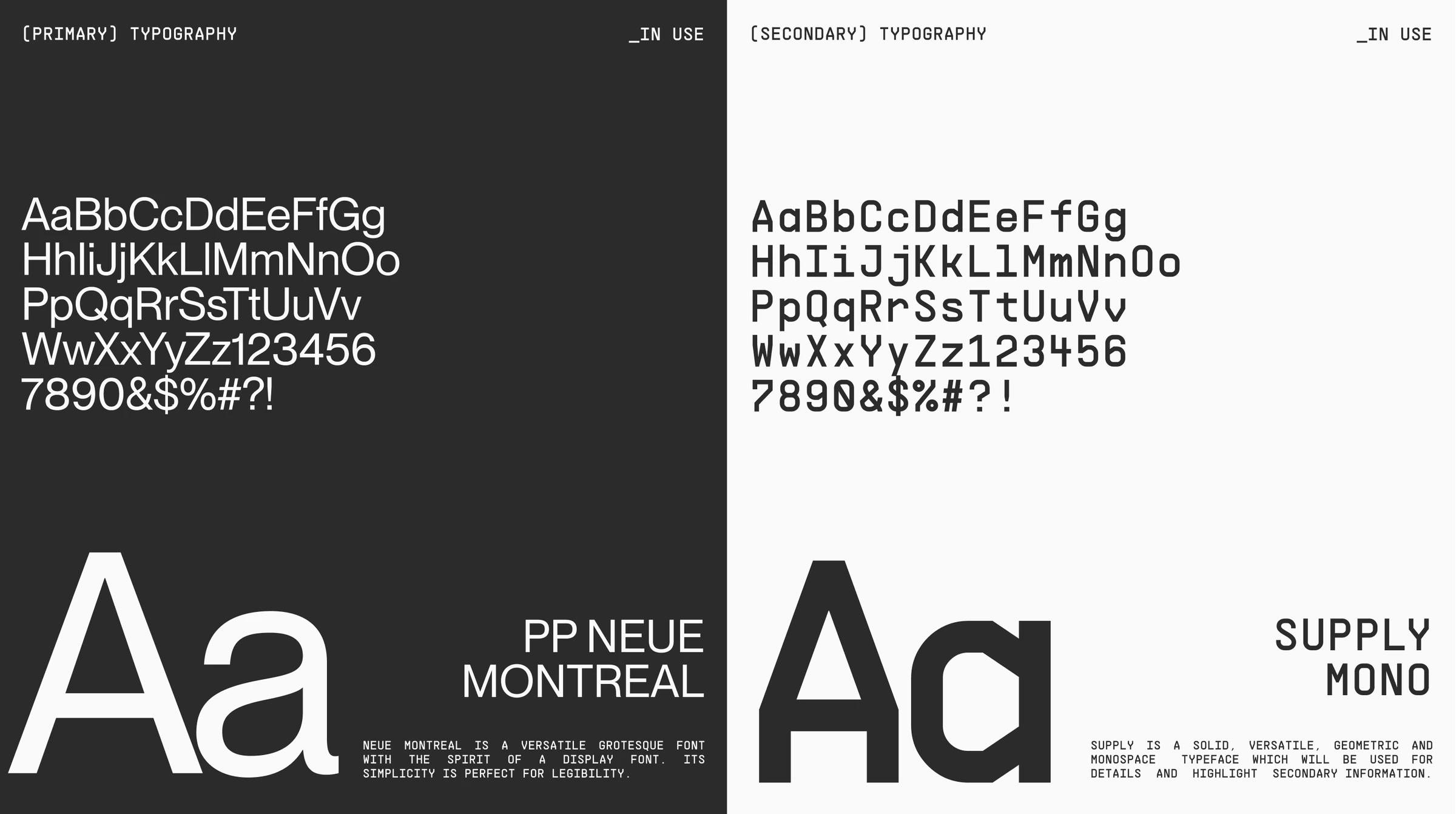
Lumen primary and secondary typography system.
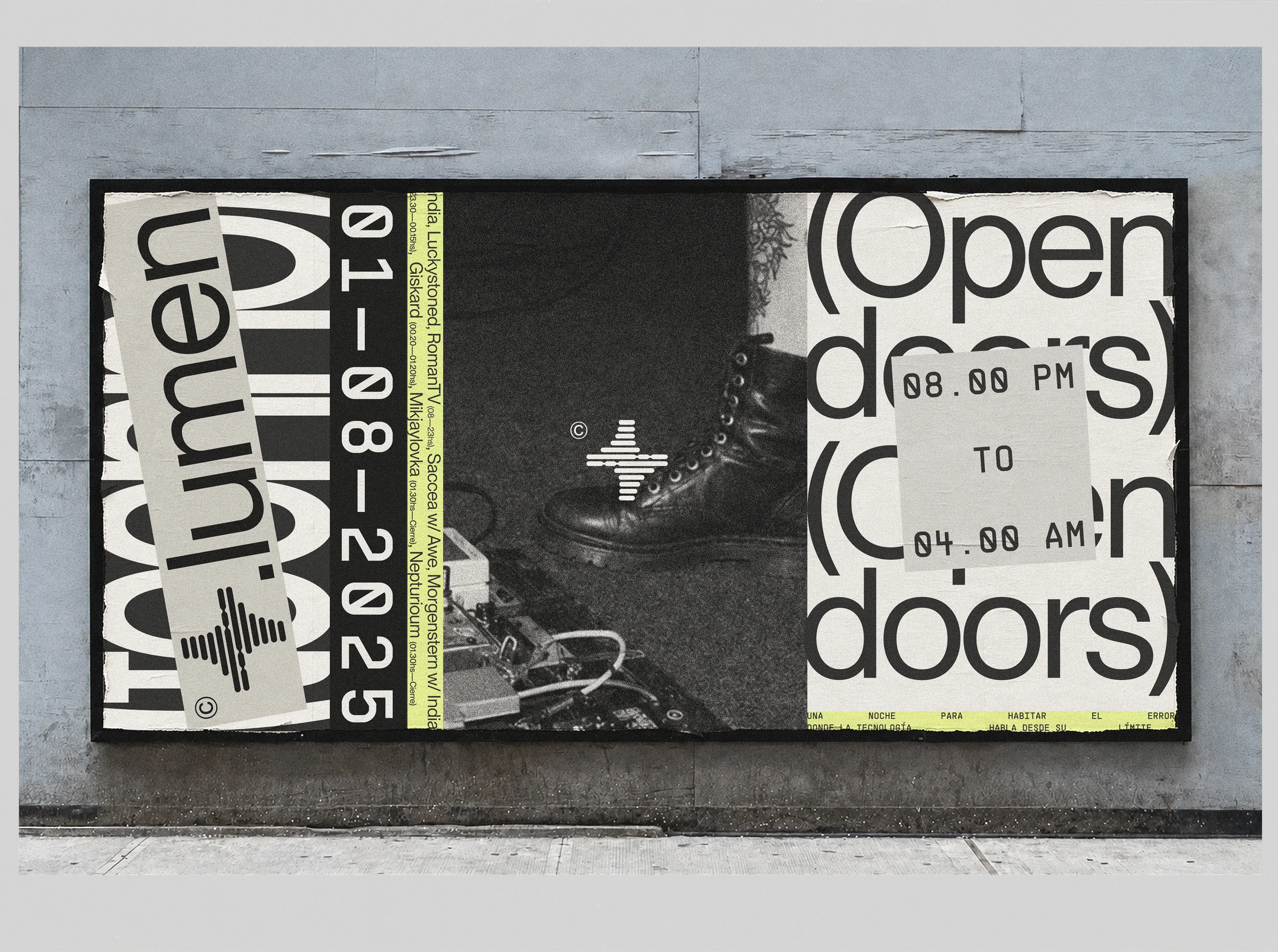
Large Lumen event poster installed on a concrete wall.

(the challenge)

The project needed to communicate several ideas at once without becoming overly theoretical: decentralization, experimentation, community, nightlife, and the productive relationship between art and technology. It also needed an identity flexible enough to live across a physical event, interactive installations, printed graphics, merchandise, and fast-moving social content. The main creative challenge was to turn a cultural position into an immediate visual and sensory experience. People did not simply need to understand the message; they needed to feel invited into it.

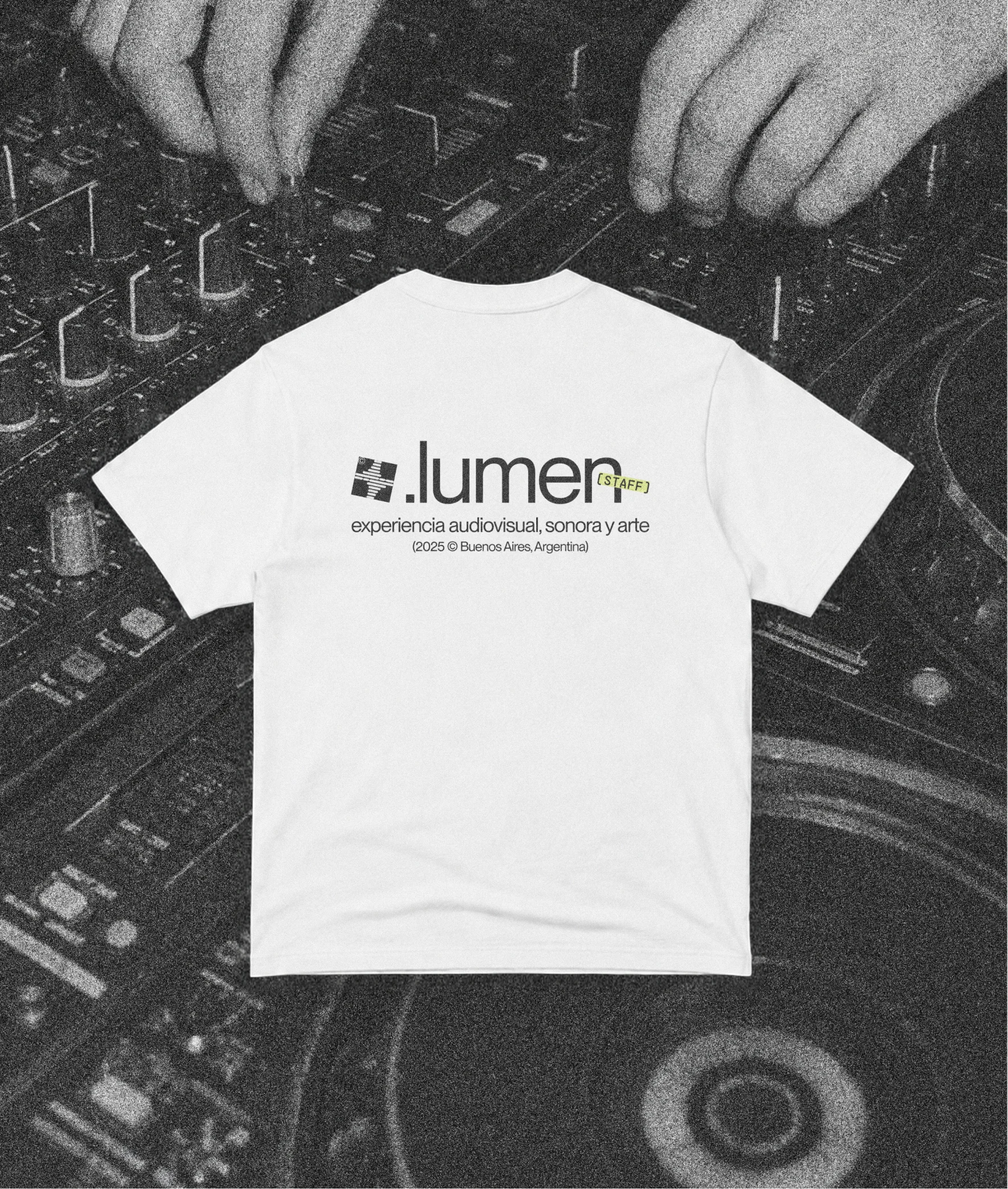
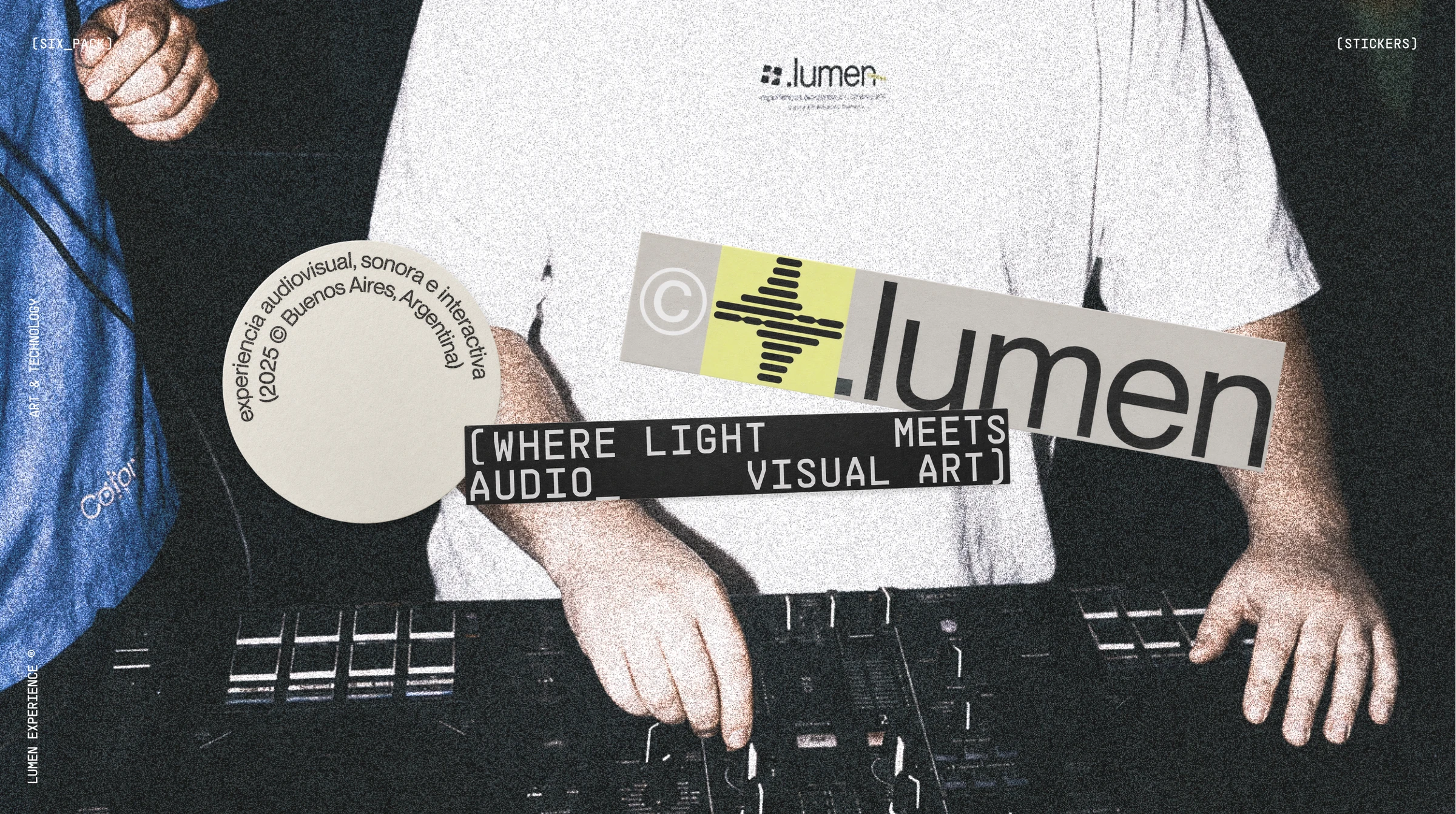
White Lumen T-shirt over turntables.

(the concept)

The name Lumen refers to light as a measurable force, but also as a metaphor for visibility. The concept became the foundation of the brand: to illuminate work, people, and territories that are often left outside the dominant cultural frame.

Rather than presenting the periphery through lack or comparison, the identity positions it as a site of production, experimentation, and quality in its own right. Lumen does not ask for validation from the center. It creates a new point of attention.

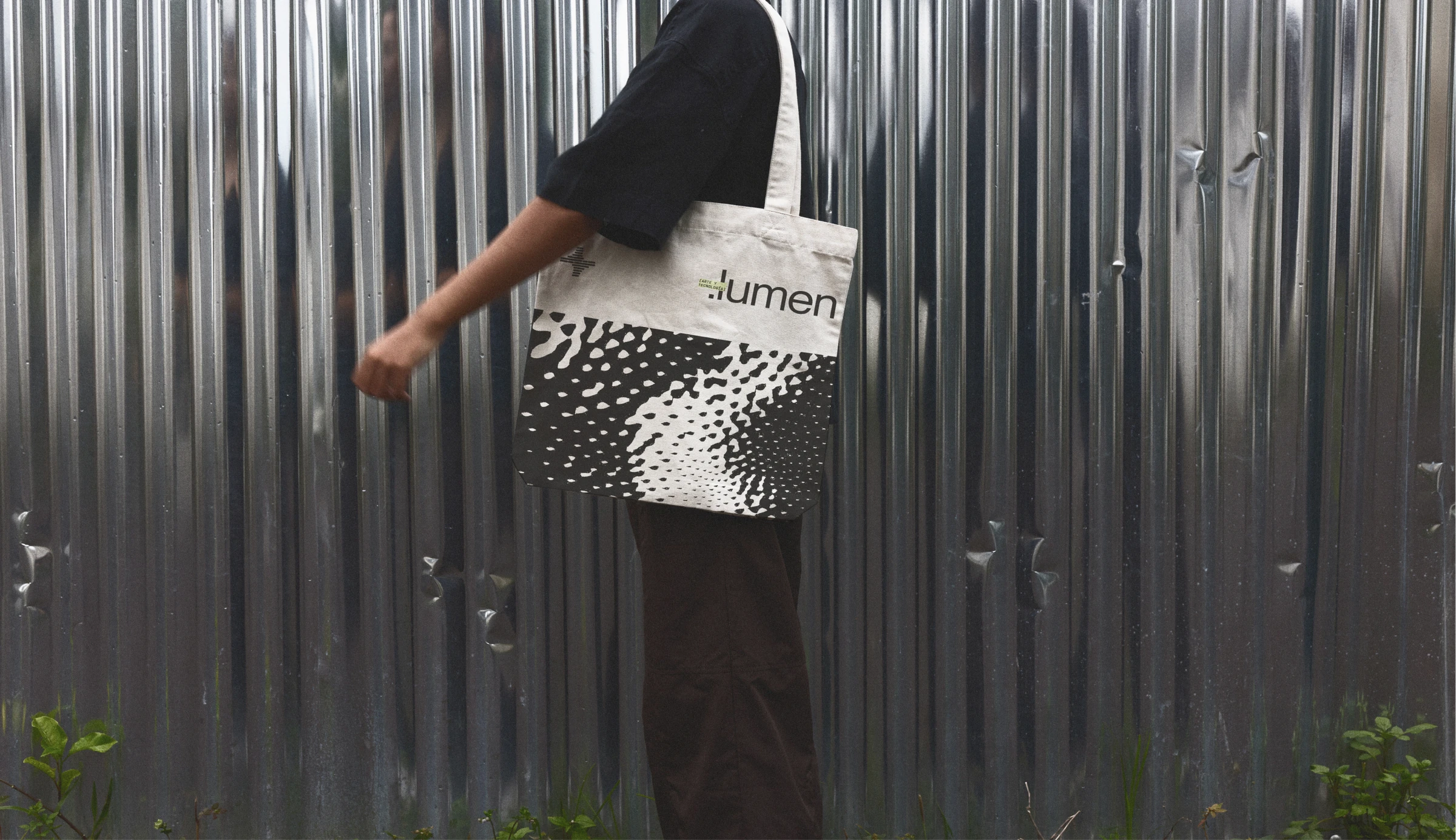
Person carrying a Lumen tote bag.

(design process)

I created the brand from the ground up, defining the visual direction and a system capable of moving between the analog and the digital. The identity was designed to feel luminous, kinetic, and slightly unstable—reflecting a program in which sound, image, bodies, and technology are constantly affecting one another.

The system was conceived as a living framework rather than a fixed set of assets. Typography, light, contrast, motion, scale, and graphic repetition could shift across formats while preserving a

recognizable attitude. This flexibility allowed the brand to support different artists and audiovisual languages without forcing them into a single aesthetic.

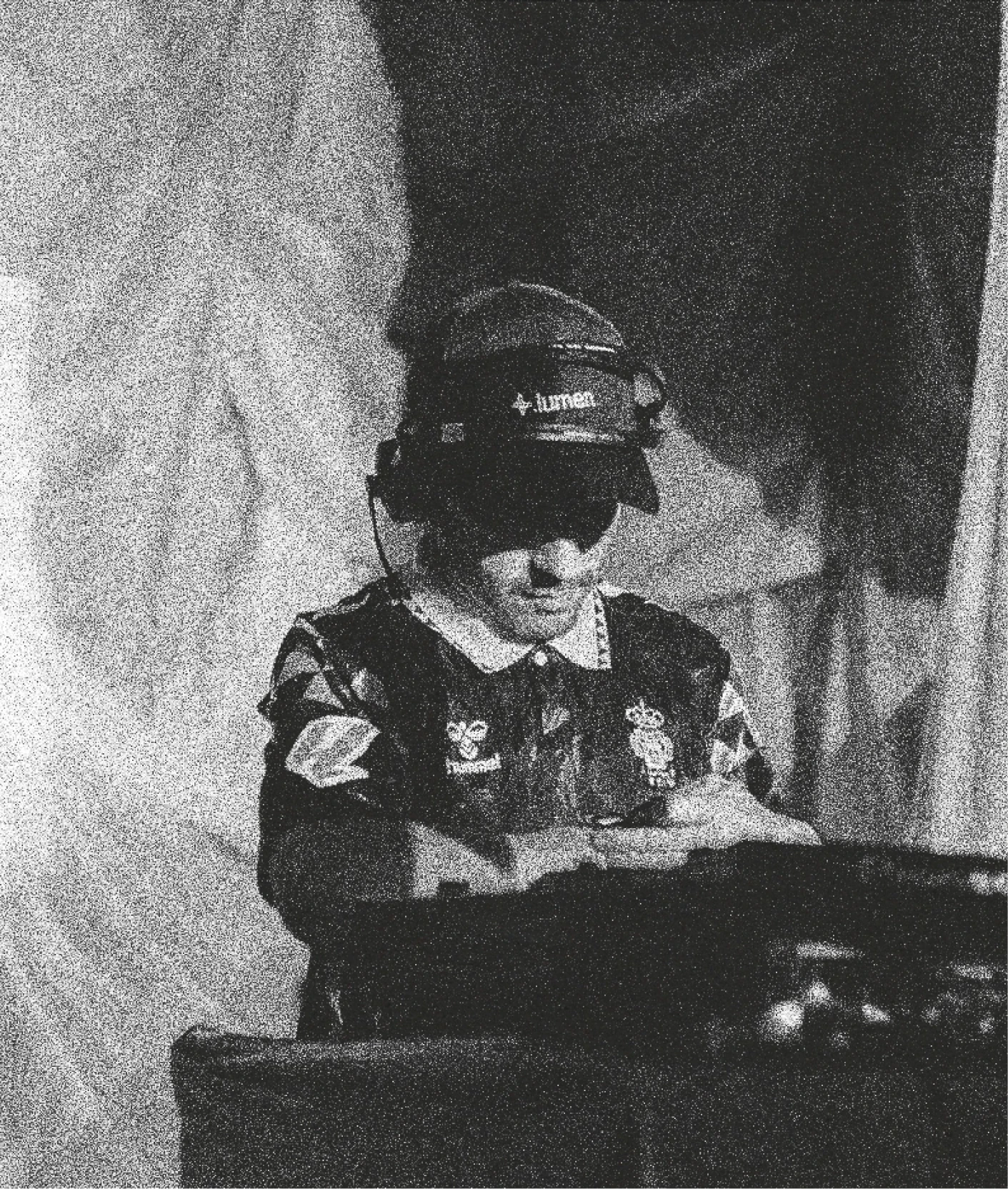
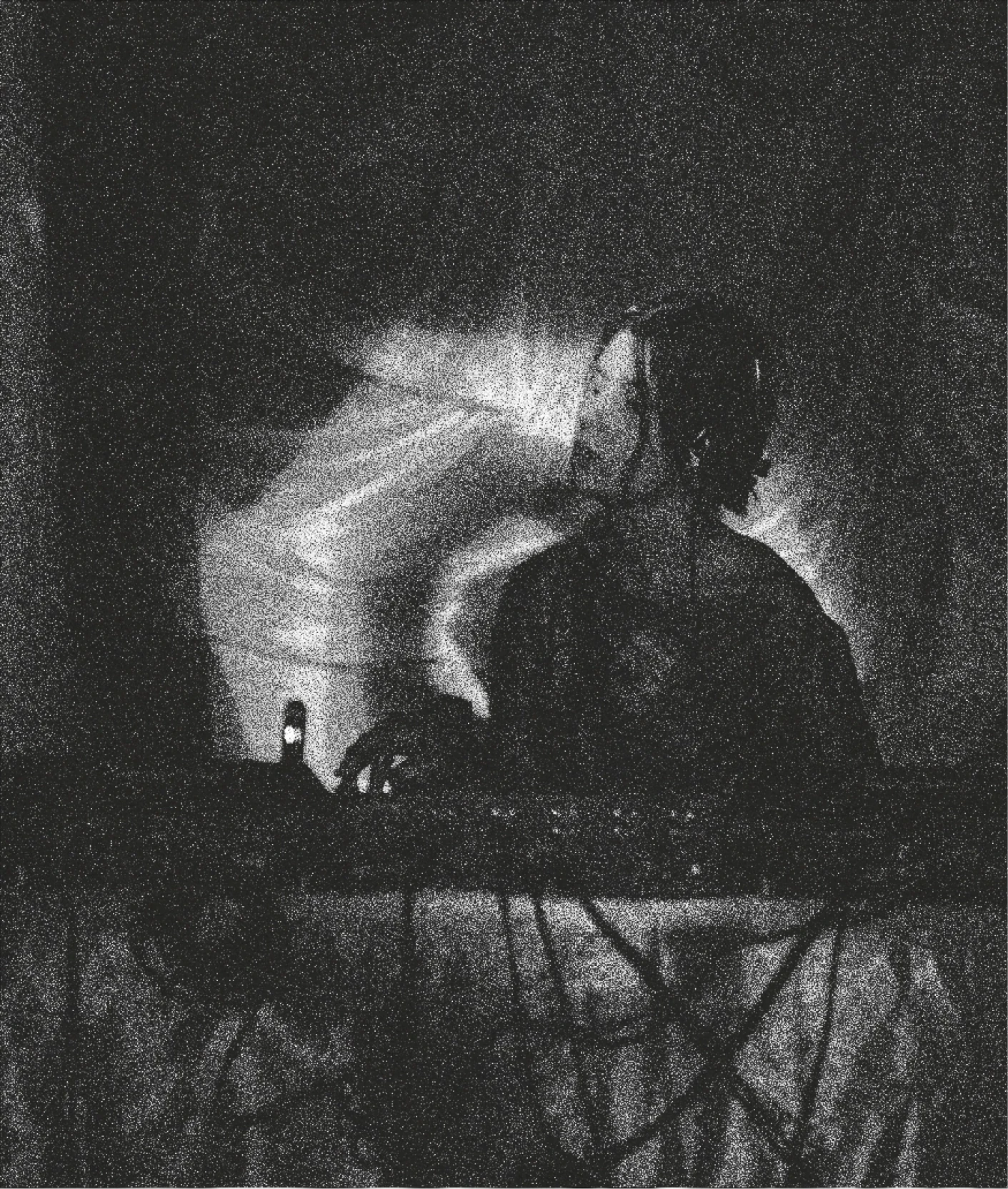
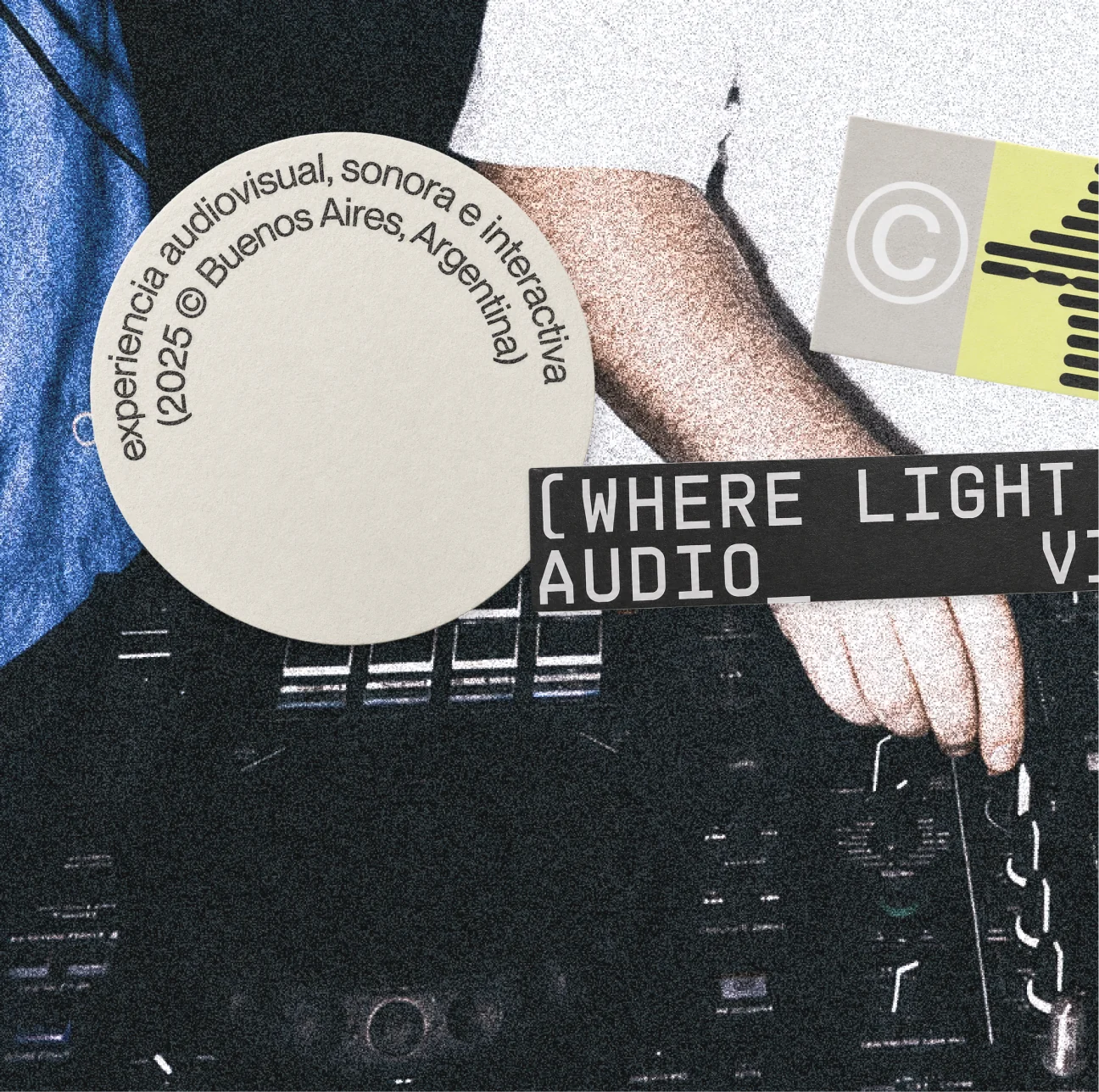
Lumen visual identity layered over a DJ performance.
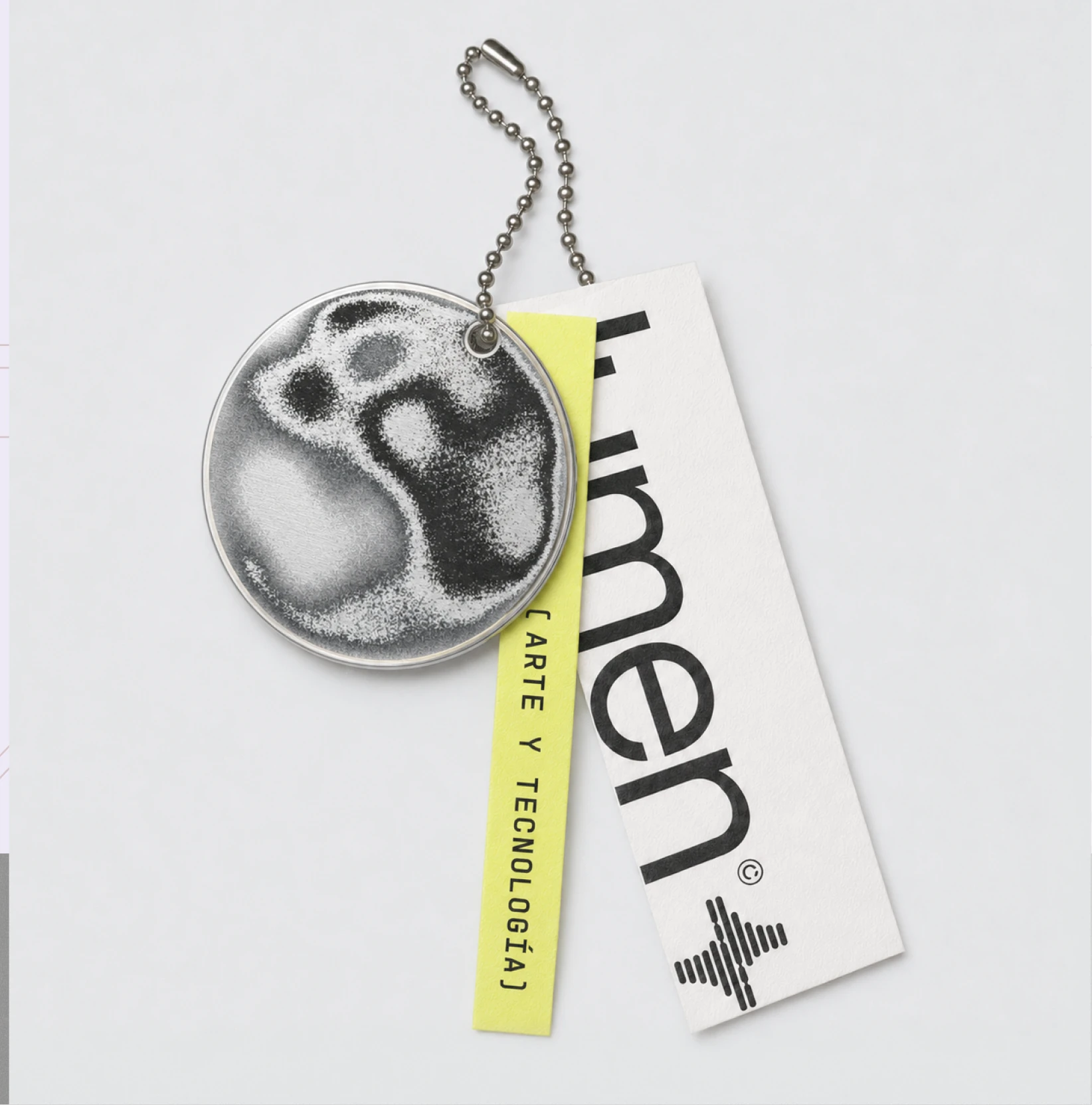
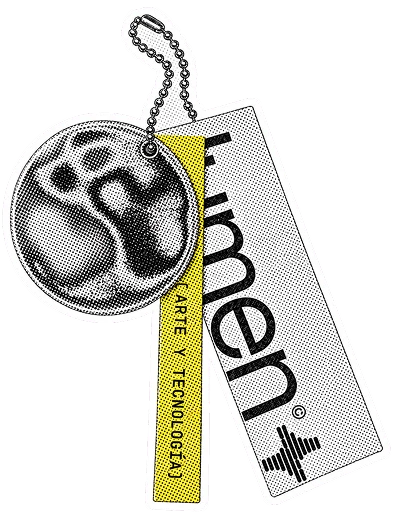
Lumen keychain and printed tag.

(the experience)

The event combined DJ sets, experimental audiovisual work, and interactive installations. Cameras, sensors, projectors, computers, mapping, and sound-reactive visuals transformed the venue into a sequence of environments. In several pieces, the audience’s movement activated or altered the work, making participation part of the final image rather than an interaction added afterward.

The experience moved between physical and digital matter: printed surfaces, sculptural elements, screens, projected light, silhouettes, sound, and responsive visuals. This dialogue helped make the project’s position tangible. Technology was not hidden, fetishized, or treated as an enemy; it became another artistic material through which identity, collaboration, and presence could be explored.

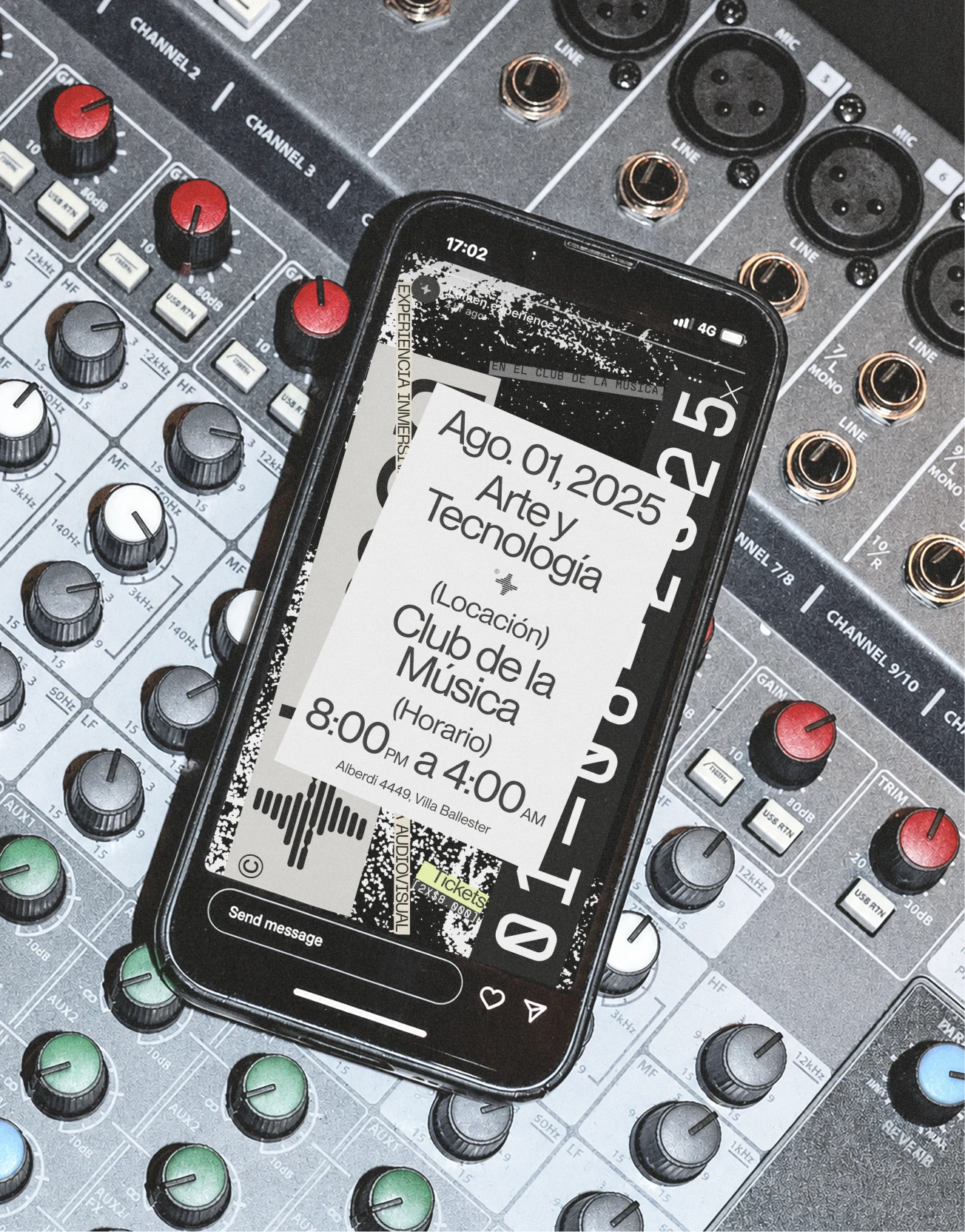
Lumen mobile event announcement over an audio mixer.
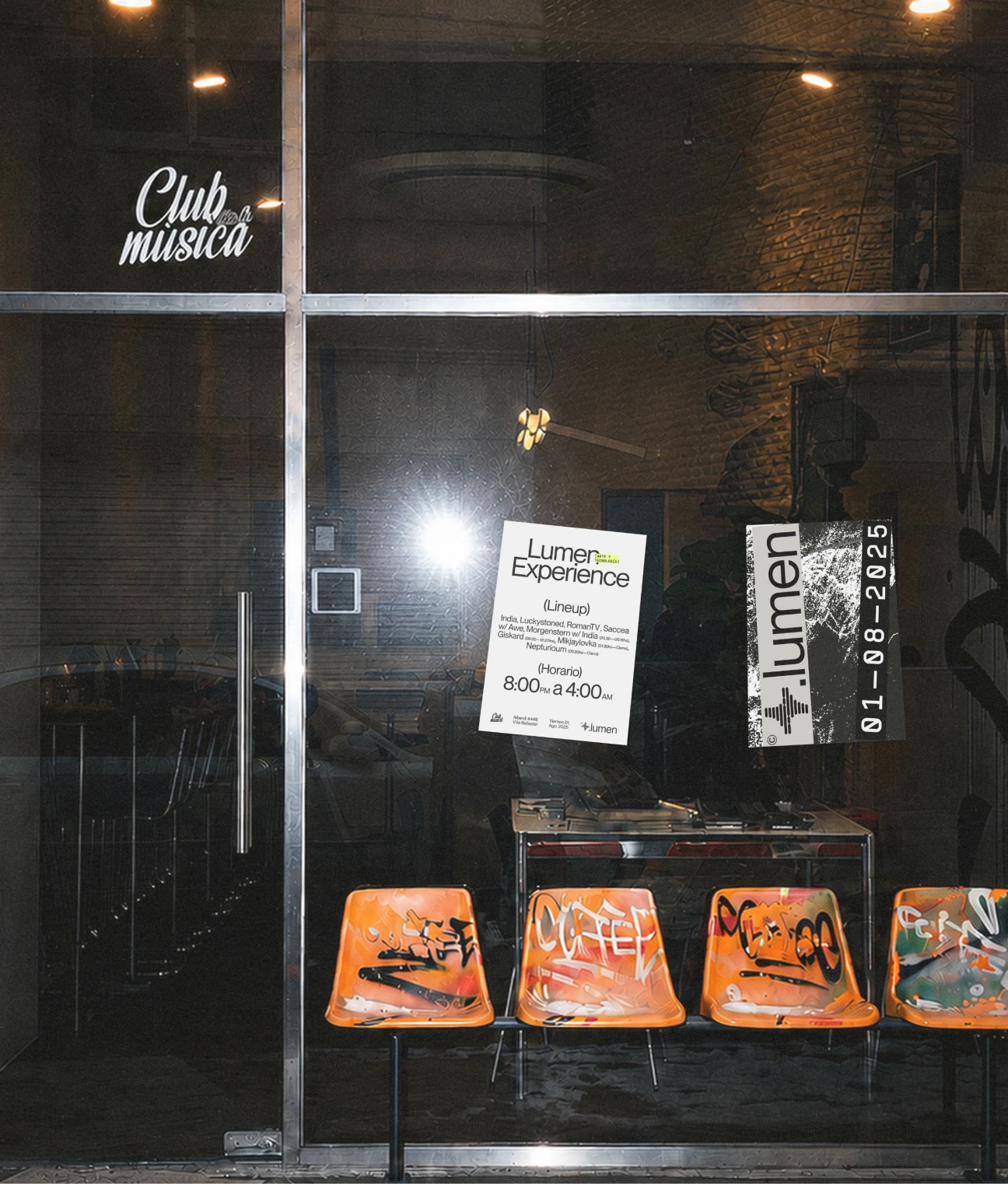
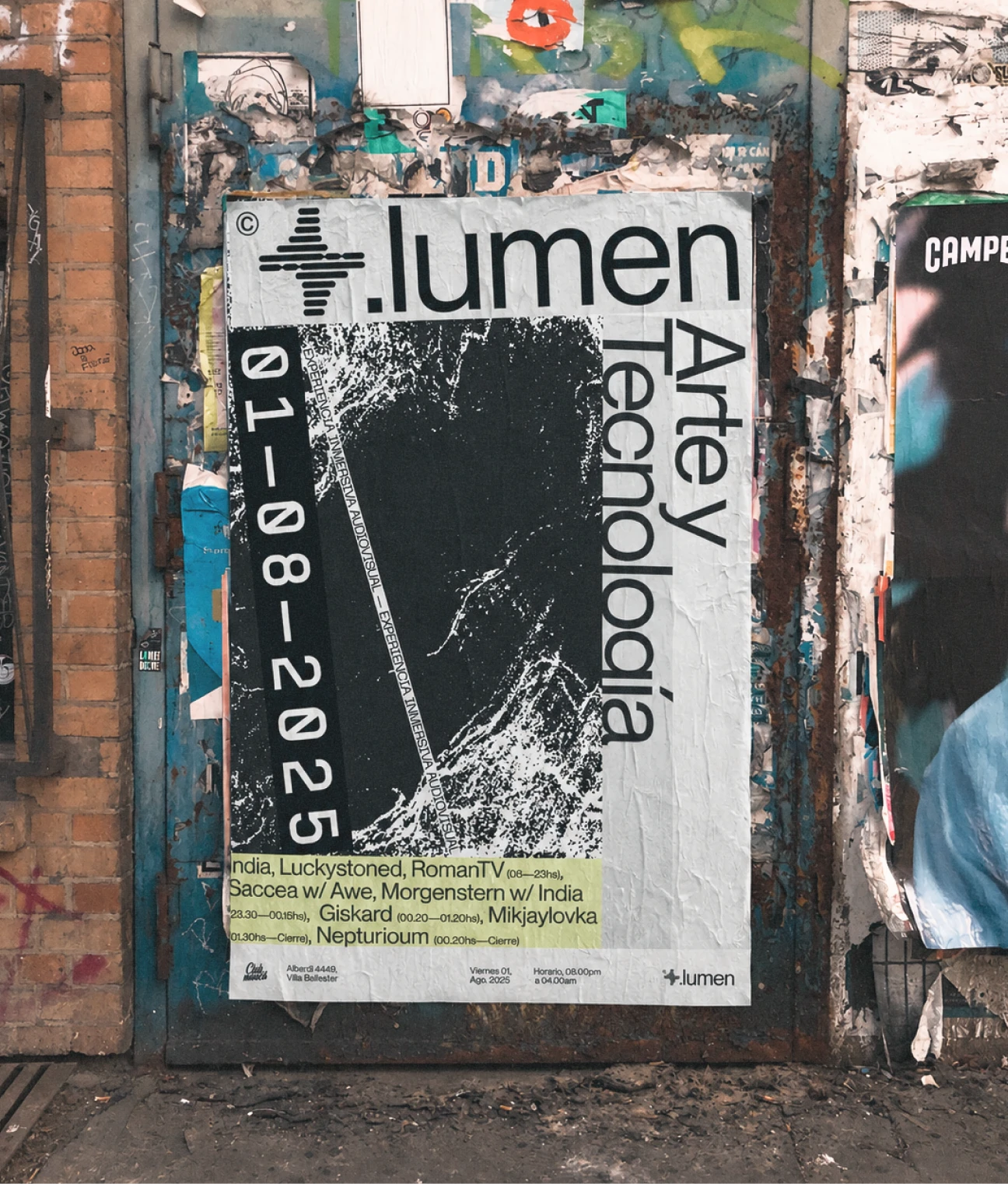
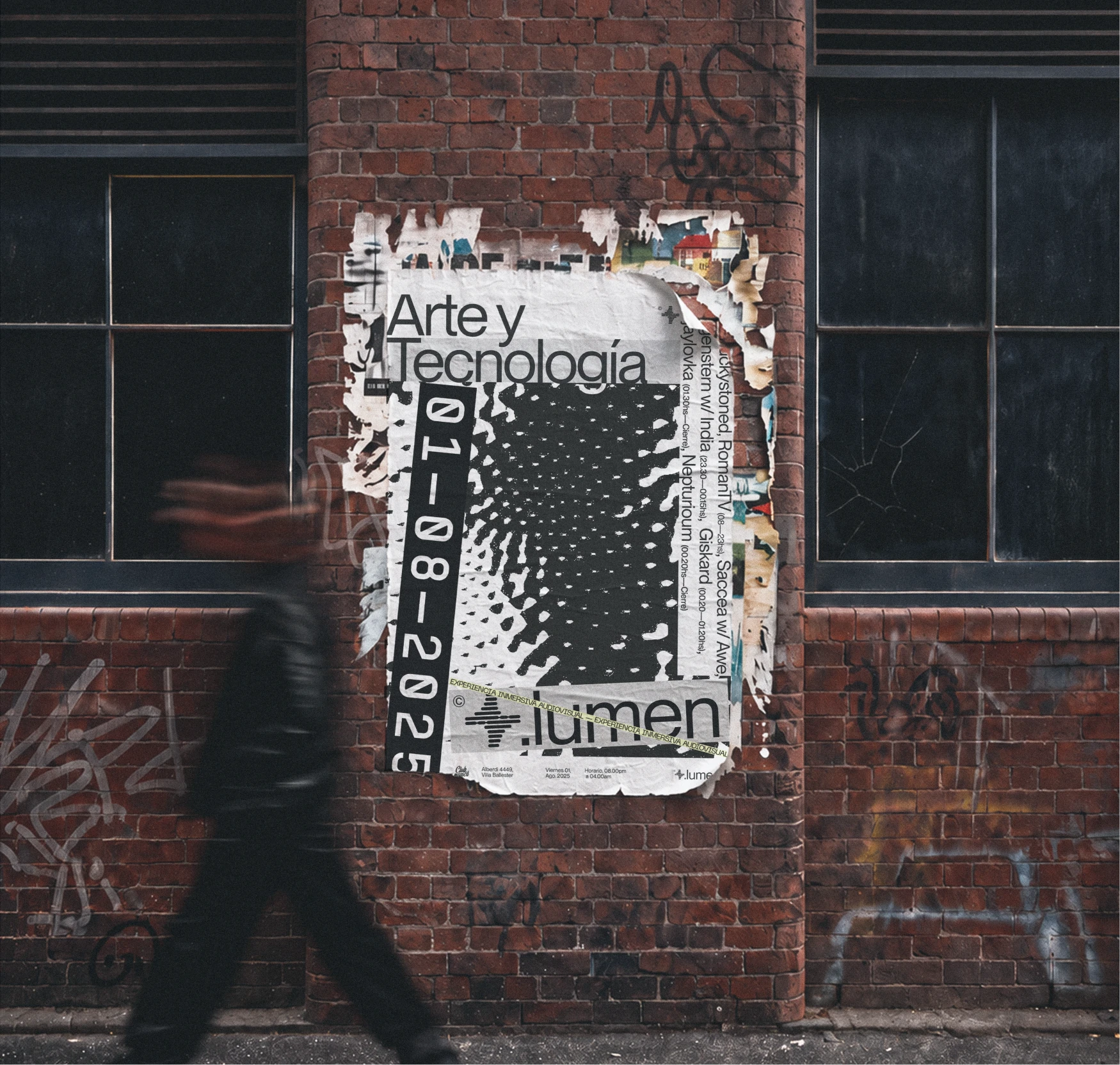
Lumen event poster installed on a brick wall.

(physical & digital touchpoints)

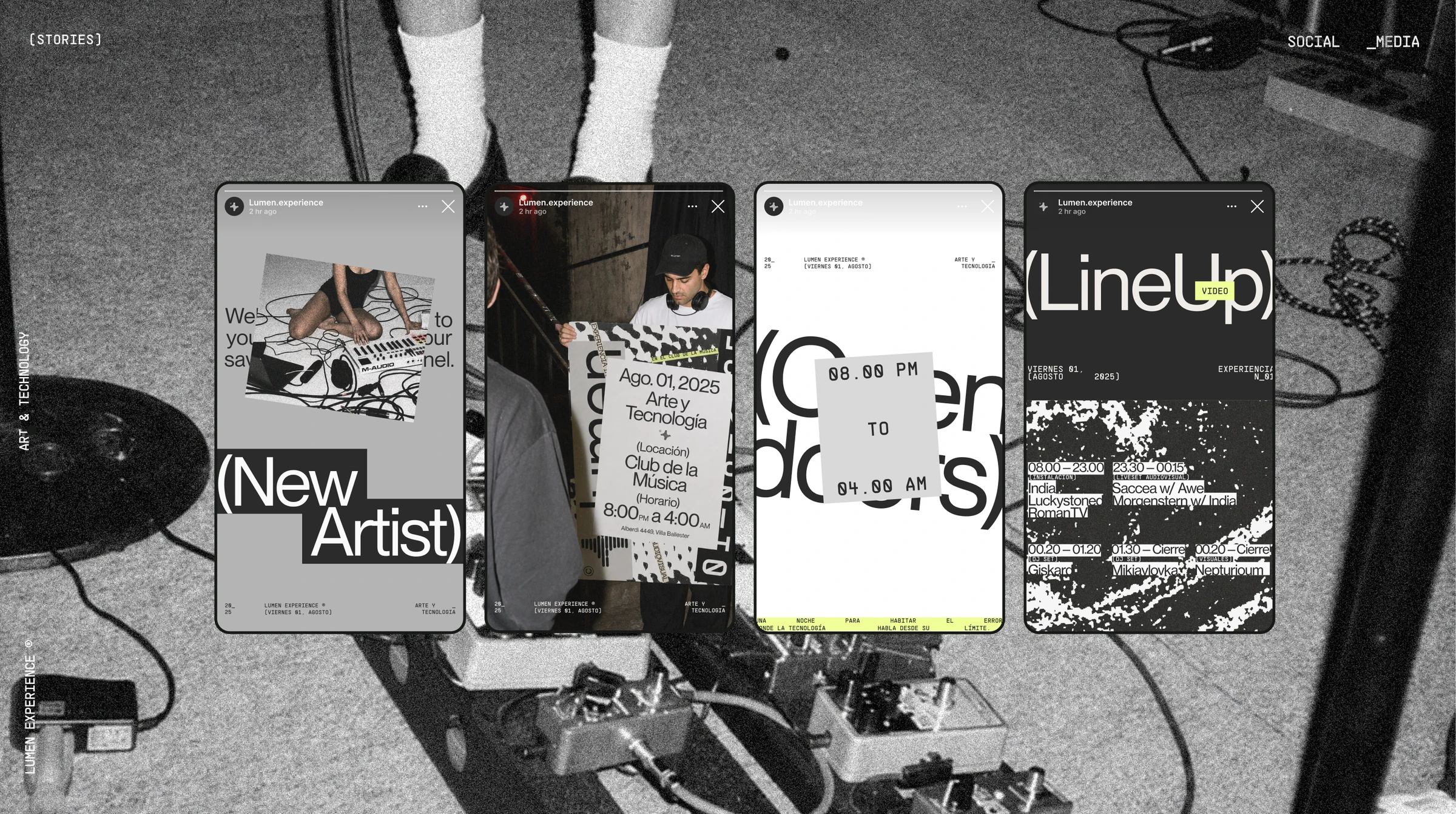
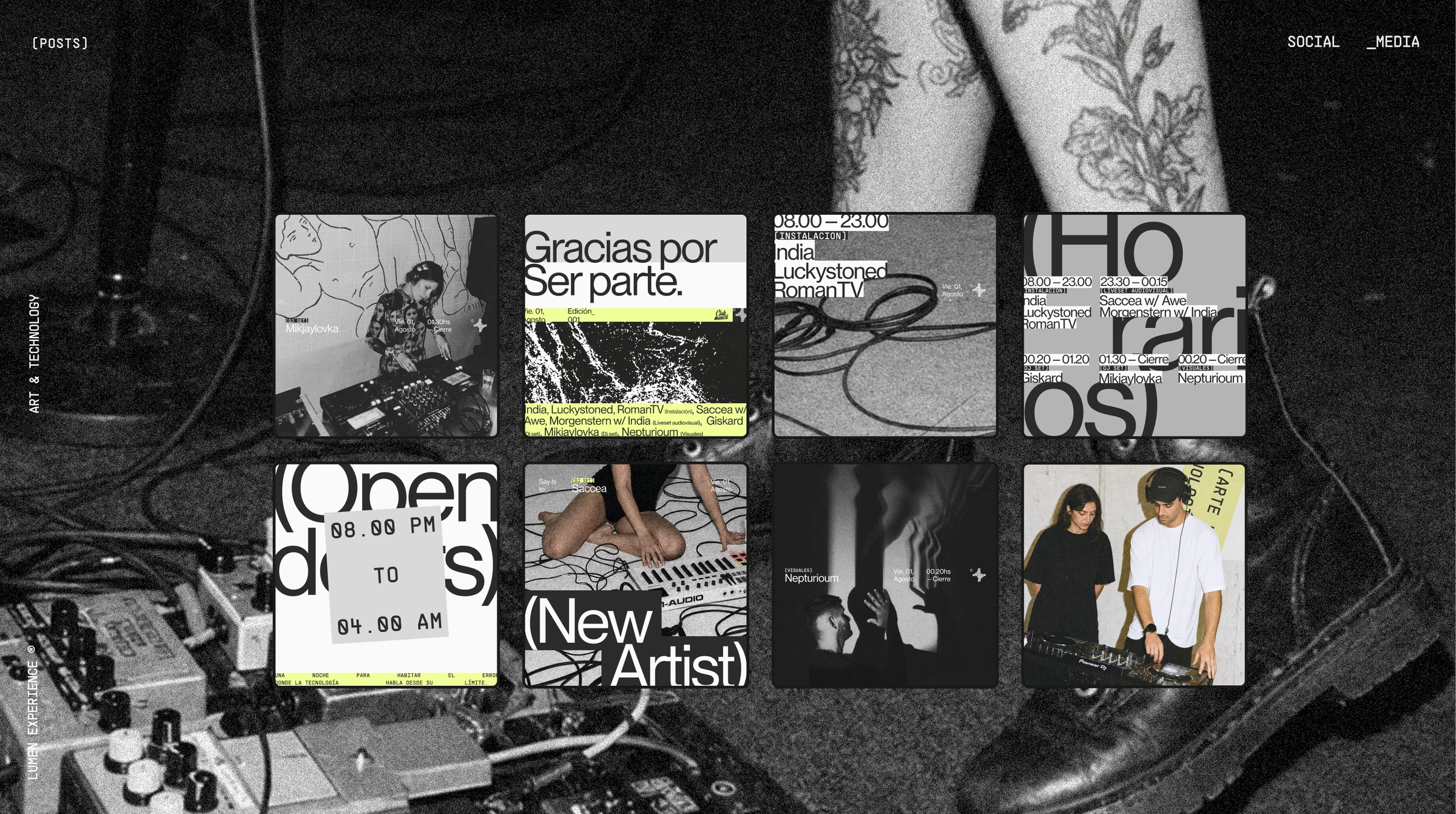
I translated the identity into printed graphics, event materials, merchandise, and digital communication for social media. Each application had a different practical role—from generating recognition before the event to shaping the atmosphere inside the venue—but all of them belonged to the same visual world.

The printed and merchandise pieces extended Lumen beyond the screen and gave the project a physical memory. Social media, meanwhile, worked as the first point of access: a way to

introduce the artists, communicate an unfamiliar location, and reduce the distance between the audience and a cultural circuit they may not yet know.

Lumen social media screens displayed across mobile devices.
A grid of Lumen social media artwork over event equipment.

(the outcome)

Lumen became more than a visual identity for an audiovisual event. It created a framework for making overlooked artists and territories visible without reducing them to the label of “emerging” or defining them by their distance from the center. The project connected cultural positioning, technology, and design in one system: the message was present in the communication, but also in the location, the lineup, the installations, and the way the audience participated.

The strongest result was the coherence between purpose and experience. A brand about visibility used light as both concept and material. A project about decentralization created value from its own territory. And an event about technology treated it as a shared creative language, capable of bringing artists, spaces, and audiences into contact.

Lumen demonstrated that cultural relevance is not defined by a postcode. Quality, experimentation, and community already exist beyond the established circuit; the work is to create the conditions for them to be seen.

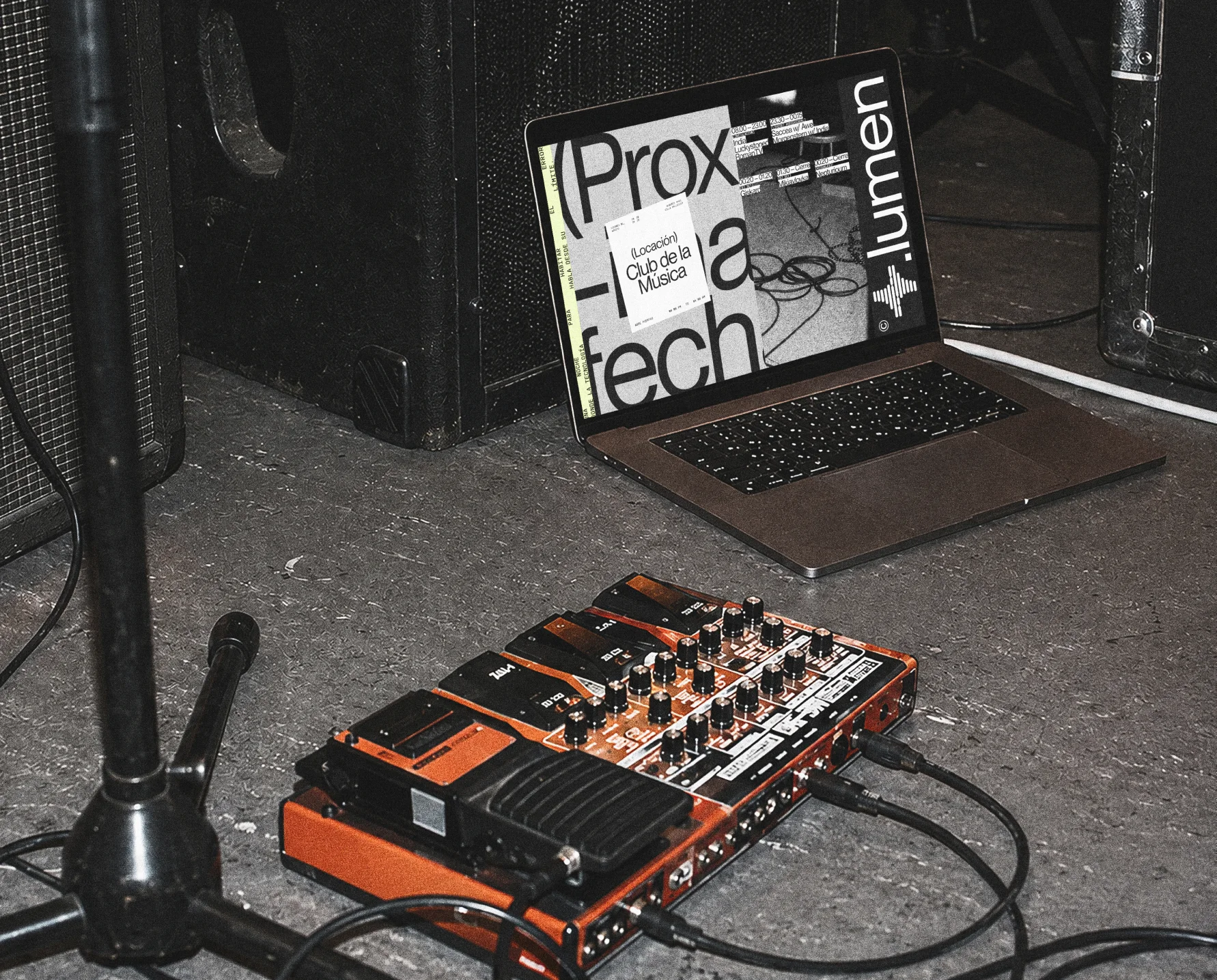
Lumen visuals shown on a laptop beside event equipment.
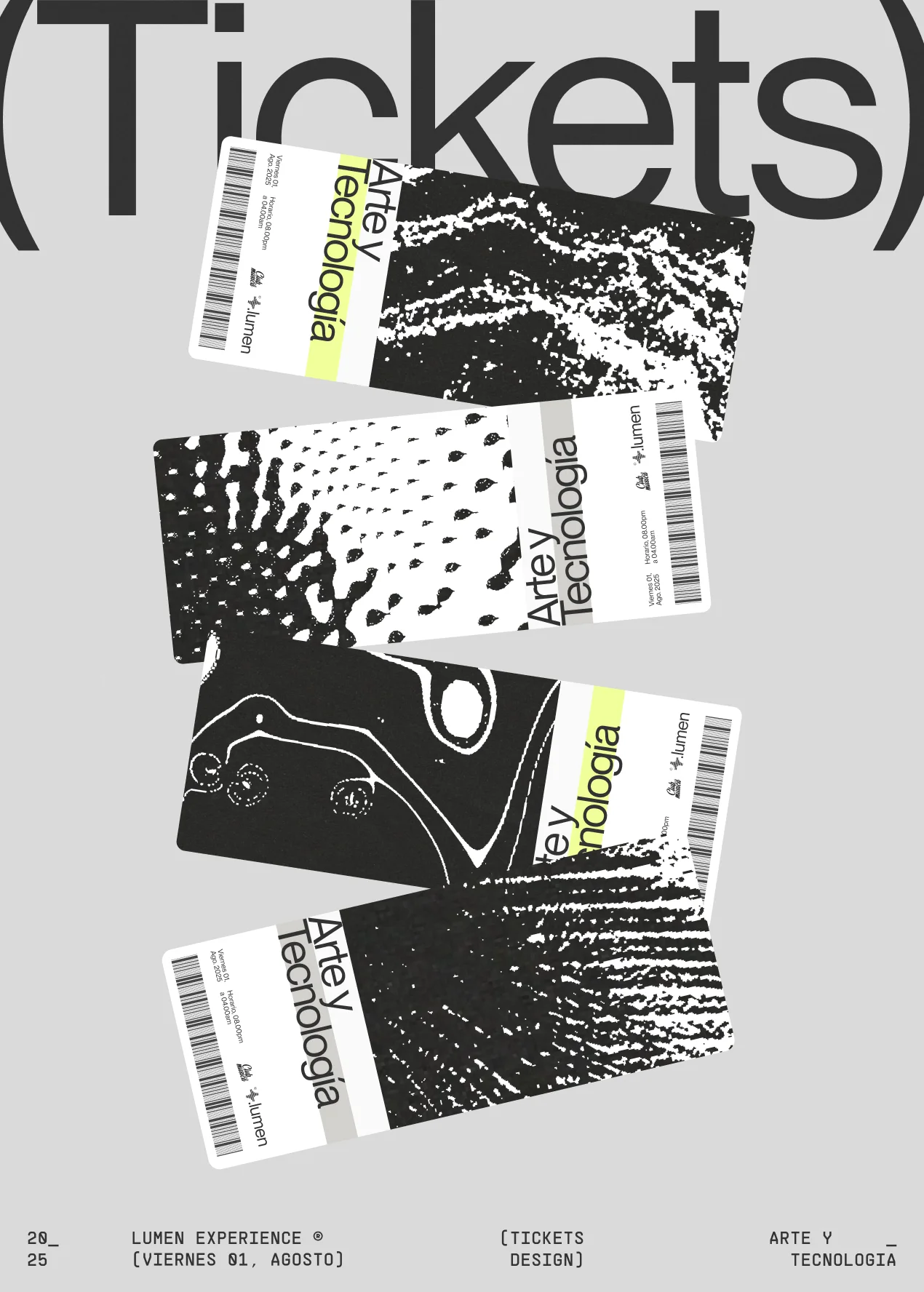
Lumen ticket designs.

(credits)

Project Founders & Leads / Luckystoned & 1nd1a

Spatial Art Direction, Scenography & Production / Guillermina Arbos & Camila Sesler

Photography & Film / Glenda Lazart

Pss, let’s continue

See All (+)
01_Winona_UX—UI Lead, Visual & Motion Designerwinona project cover
02_Genova_Art Direction+Visual Designgenova project cover
03_Amazon_UXUI Lead+Art Direction+Visual Designamazon project cover
04_MaxMaher_Art Direction+Visual Designmaxmaher project cover05_Outliant_Art Direction+Visual Design+UXUI Leadoutliant project cover06_Lumen_Art Direction+Visual Designlumen project cover
07_Blend360_UX—UI Lead, Visual & Motion Designerblend360 project cover